Modern Medical Laboratories: Supporting Excellence in Medical Education
Medical education extends far beyond lectures and textbooks. While classroom learning builds a strong theoretical foundation, practical laboratory training transforms that knowledge into real-world understanding. At Lumbini Medical College, modern laboratories play a vital role in preparing future healthcare professionals by providing students with hands-on experience in a safe, structured, and technology-enabled learning environment.
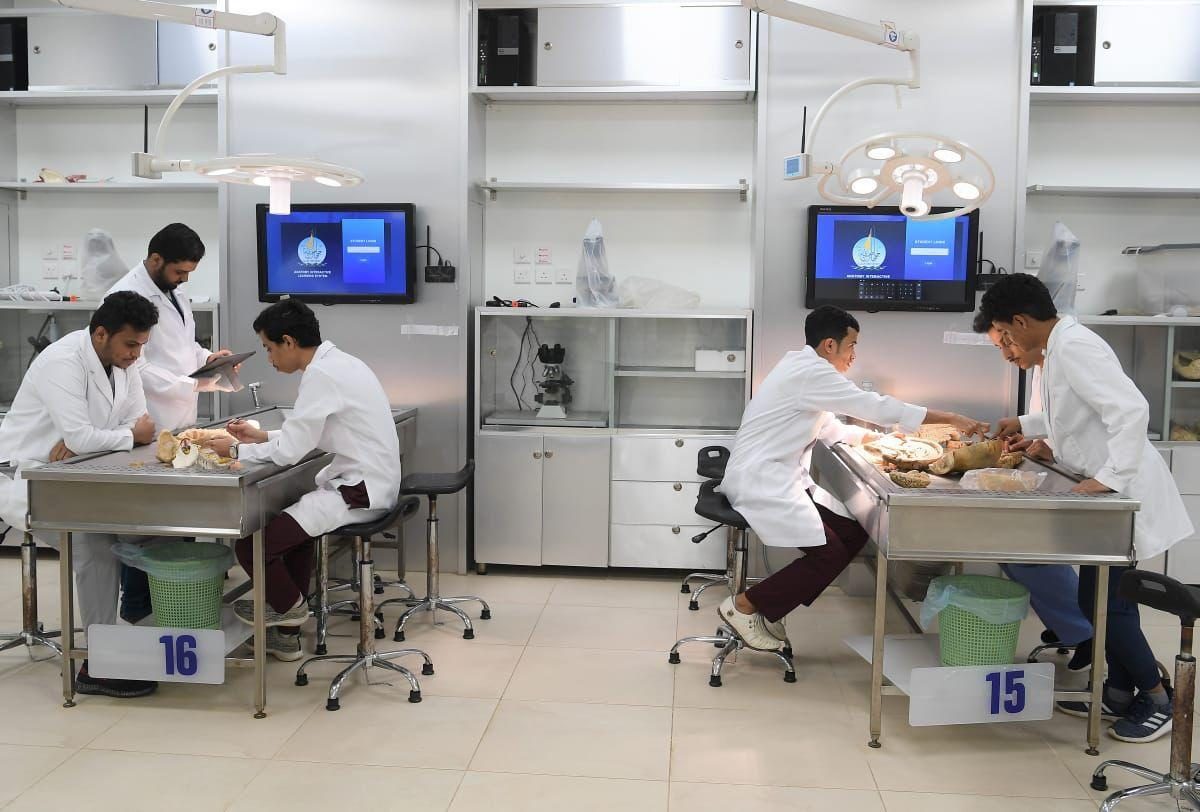
Bridging Theory and Practice
Understanding the human body, disease mechanisms, and laboratory investigations requires more than memorization. Through practical sessions, students observe, analyze, and apply scientific concepts learned in the classroom. Laboratory training strengthens critical thinking, develops analytical skills, and encourages students to approach medical problems with confidence and precision.
Each practical session is designed to reinforce classroom instruction while promoting curiosity, observation, and evidence-based learning.
Comprehensive Laboratory Facilities
Lumbini Medical College provides a range of laboratories that support different stages of medical education. These facilities allow students to gain practical exposure across various medical disciplines.
Anatomy Laboratory
The Anatomy Laboratory serves as one of the first practical learning environments for medical students. Here, students develop a detailed understanding of the structure of the human body through guided demonstrations and anatomical study. This foundational knowledge is essential for clinical practice and future surgical training.
Physiology Laboratory
The Physiology Laboratory enables students to explore how the human body functions under normal conditions. Practical experiments help students understand body systems, physiological responses, and the mechanisms that maintain health.
Biochemistry Laboratory
In the Biochemistry Laboratory, students study the chemical processes that occur within living organisms. Practical exercises introduce them to laboratory investigations commonly used in diagnosing metabolic and systemic diseases.
Pathology Laboratory
The Pathology Laboratory helps students understand how diseases affect tissues and organs. By examining specimens and learning microscopic techniques, students develop the ability to recognize pathological changes associated with various medical conditions.
Microbiology Laboratory
The Microbiology Laboratory provides practical experience in identifying bacteria, viruses, fungi, and other microorganisms. Students learn laboratory safety, specimen handling, staining techniques, culture methods, and infection control practices that are essential in modern healthcare.
Pharmacology Laboratory
Practical sessions in pharmacology help students understand how medicines interact with the human body. Students learn the principles of drug action, dosage calculations, safe prescribing practices, and rational use of medications.
Learning Through Practical Experience
Laboratory education encourages active participation rather than passive observation. Students perform experiments, analyze findings, interpret laboratory results, and discuss clinical relevance under the supervision of experienced faculty members.
This interactive approach helps students:
- Develop strong observational and analytical skills.
- Understand laboratory procedures and scientific methods.
- Build confidence in handling medical instruments and equipment.
- Strengthen problem-solving and clinical reasoning abilities.
- Connect laboratory findings with patient diagnosis and treatment.
These experiences prepare students for the clinical responsibilities they will encounter during hospital rotations and professional practice.
Emphasis on Accuracy and Professional Standards
Modern medicine relies heavily on precision. Laboratory training at Lumbini Medical College emphasizes careful observation, accurate documentation, ethical conduct, and adherence to established protocols.
Students are introduced to professional laboratory practices, including:
- Proper specimen collection and handling.
- Safe use of laboratory equipment.
- Infection prevention and biosafety measures.
- Accurate recording and interpretation of observations.
- Maintaining quality and reliability in laboratory work.
Developing these habits early helps students build professionalism and accountability throughout their medical careers.
Experienced Faculty and Guided Learning
Laboratory sessions are conducted under the guidance of experienced faculty members who encourage discussion, critical thinking, and practical application of scientific concepts. Faculty mentors help students understand not only how laboratory procedures are performed but also why they are clinically important.
Individual guidance and constructive feedback enable students to continuously improve their practical competencies and scientific understanding.
Preparing Students for Clinical Excellence
Laboratory education serves as the foundation for clinical learning. A strong understanding of anatomy, physiology, pathology, microbiology, and biochemistry allows students to interpret laboratory investigations, understand disease processes, and make informed clinical decisions during patient care.
As students progress into clinical rotations, the knowledge and skills developed in the laboratory become essential for diagnosing illnesses, planning treatments, and communicating effectively with multidisciplinary healthcare teams.
Supporting Innovation and Lifelong Learning
Healthcare continues to evolve with advances in medical science and technology. Modern laboratory education encourages students to remain curious, embrace innovation, and develop a mindset of continuous learning. Practical training also introduces students to scientific inquiry, fostering an appreciation for research and evidence-based medicine.
These experiences help prepare graduates to adapt to emerging healthcare challenges and contribute to improvements in patient care.
Conclusion
Modern laboratories are an essential component of quality medical education. At Lumbini Medical College, practical laboratory training complements classroom teaching by providing students with the knowledge, skills, and confidence required for clinical practice. Through well-equipped laboratories, experienced faculty, and a strong emphasis on scientific excellence, the college prepares future healthcare professionals to deliver safe, compassionate, and evidence-based care.
By combining academic knowledge with practical experience, Lumbini Medical College continues its commitment to developing competent medical professionals who are ready to meet the evolving needs of healthcare in Nepal and beyond.